


Experiencing an Inability to Trust After Loss
/ General : Eleanor Haley
For further articles on these topics:
Well-known developmental psychologists like Erik Erickson and Jean Piaget say that our ability to trust begins to develop in infancy. If, as babies, we have people in our lives who consistently respond to our needs for things like comfort, affection, and food, we can establish a general sense of trust in the goodness of the world, others, and ourselves that will aid us in having secure relationships throughout our lives.
That said, our beliefs about trust are not fixed and finite, regardless of our formative experiences. Much like other fundamental pieces of our worldview, we constantly revise our assumptions about trust based on our experiences. At first, our conceptualizations may be pretty basic - for example, you may believe you can trust your parents and school teachers - but not strangers. Then, over time, you add layers that draw further distinctions about who can be trusted and who cannot. So you may say - I trust most teachers, but not gym teachers (no offense, PE teachers, you were randomly selected).
In this way, we gradually refine our views on the trustworthiness of others, institutions, the world, and even ourselves. Everyone’s framework for trust looks different. Some codes may be open and broad, while others may be more restrictive. Regardless, you’ve likely developed some belief system based on your experiences that, theoretically, is supposed to keep you safe and protected, both physically and emotionally.
The Consequences of a Betrayal Can be Far Reaching
It is important to consider these individual codes when understanding how a violation of trust might affect a person. The attitudes we form around trust underlie many of our basic assumptions about how the world operates and the people in it. And when something defies our assumptions, especially in an extreme or shocking way, it has the potential to completely upend our beliefs far beyond those related to the specific circumstances.
[Suggested Reading: Death, Grief, and Shattered Assumptions]
For example, let’s say someone has complete trust and faith in their best friend, and as a general rule, they trust all their friends. But one day, they discover their best friend has been stealing from them for years, right under their nose. This shocking revelation is so utterly unexpected that the person no longer knows what to believe about anyone. Not only do they find an inability to trust their best friend, but they’ve lost the ability to trust all their friends. They may even question whether they can trust themselves and their own instincts. They may find themself saying things like:
“If she could lie to me, then anyone could.”
“How could I have missed the signs? What else have I been overlooking?”
“I’ve now learned you can never fully trust anyone.”
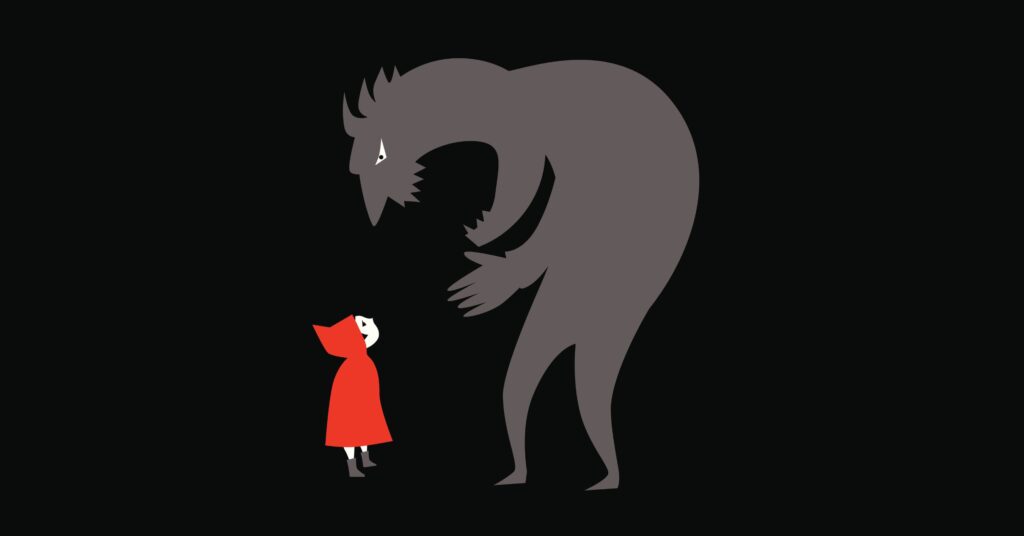
The greater the extent to which an event violates a person's code, the more shocking it is, and the higher the likelihood that a person's beliefs about trust in general will be shattered. This may be especially true when the person who violated trust is close to the individual. As Ronnie Janoff Bulman shares in her book Shattered Assumptions:
"For survivors who have been victimized by a person they know and have trusted, such as a parent, spouse, or friend, this breakdown in interpersonal trust is particularly acute. The victim feels utterly unsafe and unprotected."
However, she also shares that there can be significant impacts for those victimized by a stranger.
"Yet even the individual victimized by a stranger is likely to experience a breakdown in interpersonal trust, a newfound perception of the interpersonal world as hostile and dangerous....The entire world of people becomes suspect. Who can be trusted? Who is completely safe?"
An Inability to Trust is Often a Secondary Loss:
A diminished ability to trust is often a consequence of a primary event. For example, if your partner has an affair, the loss of the relationship (at least as you knew it) is the primary loss. Experiencing a general inability to trust is an ongoing consequence of the betrayal, making it a secondary loss.
[Suggested Reading: A Deep Dive Into Secondary Loss]
Secondary losses have significant impacts, but because the main focus is coping with the primary loss, even the person experiencing the loss may struggle to see how they add to their suffering. And until a person can see how their experiences have impacted their ability to trust, mistrust may wreak havoc on their relationships and make it difficult for them to find support and healing.
The Impact of Losing Trust:
Generally speaking, the ability to trust is helpful. It's what allows you to let down your guard and be vulnerable. It's how you're able to hand over control to others. For example, you might trust a pilot's training, so you willingly put your life in their hands. Just as you might trust a doctor to do surgery, a therapist to keep what you tell them confidential, or a partner not to lie to you. Without trust, life becomes more challenging as people may live constantly on edge and become more restrictive, isolated, and limited in who they will open themselves up to and what they are willing to do.
Without trust, people may find themselves questioning everything they thought they knew and feel utterly unsafe in their relationships and the world. As a protective response, they may close ranks and question everything and everyone as they attempt to rebuild their understanding of people, groups, organizations, and institutions.
Post-loss is a critical time for revising and rebuilding shattered beliefs. How these beliefs are rebuilt after a loss can influence a person's ongoing outlook on life. Many may find a way to accommodate the reality that some people will defy your trust, but not all. While others may experience a diffuse inability to trust and continue to see the world and people in it as dangerous and threatening.
How have you noticed your beliefs about trust have changed since your loss? Share in the comment below.




JP October 28, 2024 at 10:14 am
Ok…so when I saw the title of this article I thought it would be about how the loss of a loved one affects your ability to trust that all your loved ones are not going to instantly die on you as well. Or trust that the sun will rise or that the sky won’t fall. It may sound drastic but a perfectly healthy, happy person does not usually die without a cause so the whole experience of what is supposed to happen each day is tossed on its head. Now, I realize healthy, happy people don’t usually die so that would not be the experience of most if your readers. So, of course, there is more to it.
Gail October 22, 2024 at 4:49 pm
I’ve been searching these past six months to find other people who have been subjected to the absolutely horrendous medical system we now have as they are trying to navigate it and advocate for their seriously ill loved one. They’re fine for broken legs but my husband and I were immersed into the world of medical trauma from the get go ever since my husband was diagnosed last April with an aggressive, incurable, cancerous brain tumor. He was in one hospital or skilled Nursing Facility after another (never allowed to go home) and underwent numerous traumatic “procedures” and horrific screw-ups by health care workers which I know traumatized him because it sure as hell traumatized me. I can’t believe what he was subjected to and it’s made me sick with grief! I was there with him for most of it and I really feel like I need a therapist certified in Medical Trauma (there actually is such a thing) to help me process what happened to him in the four months after his diagnosis in April until he passed away in my arms last August. I can’t even recount the events now in this post because doing so would make me feel ill and I have to go somewhere tonight. This support group is the only one that has addressed the loss of trust with the medical profession by those who had to watch their loved one be tormented by them.
Revathy October 26, 2024 at 9:47 pm
Dear Gail, Thank you for sharing your experience and I recognize the agony you have had to go through and am sorry for your trauma and loss. I suffered with my parents and continue to do so with immense guilt and shame. I did not do my due diligence or voice my concerns and failed to protect them. I agree that recounting the events can make one truly ill. It indeed is a medical trauma and I would like to add that as a result I suffer deep moral injury which cannot go away and sticks with me every minute of every day.
i hope that you will be able to find some solace and move through life with the trauma.
Nancy October 15, 2024 at 11:42 am
I can’t thank you enough for publishing these remarks. They all register with me in this confusing grief and mistrust time. I truly do not feel safe even in my own home. And I live in as safe a neighborhood as most. But I feel lost and lonely and scared most of the time now. My medical mistrust is far reaching. It was always with me but it is off the charts now. I feel like I should have never trusted that my husband’s doctors had the same goal as my husband and I had in working with us. And in the hospital, I am appalled by the disregard of what we wanted and needed that was present. When someone you love is lying there helpless and ill, you are upset and not thinking as clearly as usual and unable to insist (why you have to insist, is a wonder) on doing what you know is best for your loved one. It was a horrific experience and I am broken and wounded in all kinds of ways, particularly in loss of trust.
It is helpful for me to read that I am not the only one. That my take on what happened was accurate. I truly understand and am sorry all those who write in are experiencing such pain. I hope we can all give ourselves grace.
Thank you for having this forum.
Revathy October 18, 2024 at 10:10 pm
Hi Nancy,
I connect with what you have described and appreciate your grief and the distrust of the healthcare system. You have mentioned that although you knew what would be best but for the inability to think clearly is exactly what I experienced as well. Giving ourselves grace is the hope but so so difficult to achieve. Thank you for sharing.
Revathy October 13, 2024 at 10:55 pm
Thank you for this discussion. A couple of commenters above referred to medical errors and this has affected me as well. My parents (and especially my mother) suffered serious medical errors which directly contributed to their suffering and deaths. I not only profoundly grieve the loss in this manner but feel so much anger towards myself for not doing my due diligence and towards the whole medical establishment. The sense of guilt, shame and regret of failing to protect my parents are tormenting and overwhelming. But added to that is the complete distrust of doctors and doubting medical and healthcare which are paralysing. My motto has become ‘trust no one’.
It is so difficult to discuss this aspect of loss of trust as well as the immense guilt I feel that I find myself isolated and completely alone. Falling ill and needing medical care now fills me with so much nervous fear and anxiety it is almost indescribable. This discussion by Ms Haley is very thoughtful and considered and has helped me to understand that it is a real and natural reaction and I thank her for it. But I find that coming to terms with it is perhaps not possible.
Jacquelin. FIelds October 13, 2024 at 10:12 am
I have experienced a loss of trust related to parental death breast cancer, marital infidelity and the current state of affairs in this country. Most of what I was taught and believed in my 72 years of life has been intrue skewed distorted and lacking.I am struggling with the challenge of spiritual reallignment.
View from The Cheap Seats October 13, 2024 at 10:06 am
I found, after being punted thru The Goal Posts of Life several times
it is helpful to remember the facts:
What is the source: person, Sonic chili cheese dog order, Hep B diagnosis, borrowing of something never to be returned, evolving tax structure, losing your home…
How/why, can this be worked with?
The degree of true/direct life altering impact and if any true duration…does “this” really matter in 1,5,25 years?
You and your self help/education, ongoing homework….
I do understand “change” is always ongoing-
!I am thankful for this website, I have learned so much, it is a blessing!
Joyce Matwiyiw October 11, 2024 at 4:38 pm
The past 2 months have been horrible for me -a senior living alone. My daughter
had a breakdown 2 yrs ago and has been in her 3rd place to live. she is 48 yrs
old. (She now is in a better place thanks to someone who cared). She stayed
at a lodge with mostly men and the guy who looked after everyone, meals, etc.
named Derek was a very likeable and nice guy. After his ex-wife took over the
lodge and thru him out about 3 months ago, sold the lodge and all the residents
including my daughter had to go elsewhere. We live in Hamilton and all this
awful throwing people out of their places because of a LRT transit that has
not started yet. Derek ended up at a rooming house -he was 53 yrs old and had
2 kids, no one heard from him for a week. His 16 yr old daughter called the
police when he didn’t answer the door. On the news it said he barricaded
himself, stabbed an older woman to death, beat up a man who later died
in the hospital and committed suicide. This is so shocking to me and my
daugher that my health has suffered as this was some kind of betryal
either by the devil or a terrible unexplainable event. Everyone liked Derek
and I will always remember him as the person I thought I knew? This was
some kind of betrayal to all the people who needed and thought they knew
him.
Then 2 weeks ago, a guy who befriended my daughter at the lodge
betrayed her and me when he said he would help us get her moved into
a townhouse, he got nasty and accused her of all kinds of things after
she helped him find hisnew place. We were left with an Oct. 1 deadline
and no help. I finally found a mover whodid not overcharge us and he
was such a nice person and did everything to help us. Another betrayal
from this so called friend of my daughter’s.. What is wrong with people?
I now have more aches and pains and its hard to really trust anyone
after so much betrayal by people we thought would be there for us.
All this has happened in just 2 months. I pray that my daughter and I
will start to go forward and put this awful events behind us. It is so
hard.
Thank youfor letting me write how we are feeling. It is so important for
usto speak out.
Joyce
[email protected] October 11, 2024 at 12:57 pm
We lost our 26-yr old son to melanoma last summer. He was sick for almost three years before he died. His illness and passing were horrific – leaving me with PTSD that lingers and images I will never be able to unsee.
The foremost loss of trust during that time related to my faith of five decades. As the months turned into years and the surgeries became far more serious (five surgeries, three of them on his brain ), I was forced to watch our first-born lose his body and mind. Cancer moves slowly, until it doesn’t. When he died, he no longer knew who I was – can you imagine how that would feel to a father?
Somewhere around the last brain surgery, I realized that, no matter what I had been taught, I was not willing to have faith in any god who would “allow” such butchery. Billions of sons and daughters taken throughout history; all while that god has the means to heal. No, I’ll never trust a god or a church again. Those days are over for me.
I’ve lost trust that this world is a good place. It can be good, it can be evil, but mostly it’s just indifferent. There’s no such thing as benevolence in that regard, just emptiness and random chance. I no longer trust any story about what happens when we die.
I still trust people, maybe more than before. I’ve learned that everyone has a story and almost all are good-hearted. I’ve softened greatly towards others.
Do I trust myself more? Yes, definitely. Being free from the old structure has liberated me to begin knowing myself in a kinder, more forgiving way. To build my own beliefs; ones that are right for me.
Thanks
Shell October 11, 2024 at 9:57 am
My husband died from medical mistakes. I find it difficult to trust the medical profession in general. I’m sure they are “well intentioned” but failure to look outside of the “standard of care” and take more than the standard 5-10 minutes for any appointment leaves me doubting that they have even reviewed the situation. I know trust can be rebuilt but the lack of trust is still a huge concern. I liked that this was addressed, it gives me more to think about.
Fred October 11, 2024 at 8:42 am
Interesting and potentially useful, but not a major concern right now;
Dealing with more immediate concerns, e.g. how to meet impending responsibilities. Too much to do and too little time, and no immediate help available.
TD October 11, 2024 at 12:46 am
My adult child has estranged from me. This is the most painful thing I have ever experienced. It has left me unable to fully trust any human being as they can walk away anytime…it doesn’t matter how good you are to the person or how much you love them. Only pets and Jesus Christ are trustworthy companions. I will never be the same after this experience; it has left me very wounded
clare October 11, 2024 at 12:23 am
In less than 3 years, I have lost all trust, in all things and people, and fear I will never trust again. Discovery of a cheating spouse who had been having multiple affairs for a decade all the while he was financially draining me and paying no bills; followed by a contractor who ruined 3 floor of my house during a simple repair and the ultimate, my mother’s diagnosis and death. The isolation is both terrifying and comforting. Safety is our first need and nothing feels safe anymore. How do you move on from so many losses, particularly when they come on back to back?
Patrick Hickman October 10, 2024 at 11:41 pm
My late wife’s oncologist misdiagnosed obvious symptom’s resulting in my wife ending up in ICU. I no longer trust doctors and afraid to attend one.
Pat October 13, 2024 at 10:34 am
Some of my one time very close friends no longer visit me or stay in touch. My own daughter included. I do mind the friends no longer in touch but not seeing my daughter causes me great sadness. Today I find that I no longer want to
Pat October 13, 2024 at 10:47 am
Some of my one time very close friends no longer visit me or stay in touch. My own daughter included. I do mind the friends no longer in touch but not seeing my daughter causes me great sadness as my daughter was the light of my life. Today I find that I no longer want to befriend anyone as I no longer trust friendship’s. When i needed support in my grief it was not there for me so I struggle on each day. My days are long but my nights are longer. I no longer place my trust in people not even sure about this website. Time will tell.
Heath October 10, 2024 at 8:34 pm
Since losing my partner to suicide, I no longer have the ability, either emotionally or mentally, to imagine setting up a life with a new person. when people ask me about this. To build up a new relationship / partnership is something so out of reach. When I met Pup 32 years ago, I found the person who I imagined spending the rest of my life with (he died a few days off being 30 years together). This image of sharing a life with someone new has now evaporated in terms of its reality.
As he died by suicide, Trust has become something now lost. Maybe if we had split up, I would move on after a time (maybe imagining getting back together one day). If he had died due to a physical illness then I would have experienced Acute Grief. I most likely would not be experiencing this deep lack of trust (and all the other attendant feelings that I have). Why so? Because a part of me feels that he chose to leave me and therefore I am –
1. Not a worthy person to spend a life with,
2. That any new partner will eventually leave me,
3. That I was only ever in love with Pup and no one else can ever take his place deep enough within my heart,
4. I am scared of investing in a relationship that I know will never be based again on 100 % of trust, and
5. My ability to see life with someone else is fraught with fear, uncertainty and anxiety; even depression to a degree.
When a person dies by suicide, they really take you with them, even though that is not their intention. You go on physically but inside you can feel dead and extremely empty. And as I always say, it can be excruciatingly difficult to explain these feelings and the thoughts that they can generate, with others around us. Why so?
For me, I think the words from thebook, “Faith, Hope and Courage,” by musician and song writer, Nick Cave, are well worth reflecting upon –
To be forced to grieve publicly, I had to find a means to articulate what had happened. Finding the language became, for me, the way out. There is a great deficit in the language around grief. It’s not something we are practised at as a society, because it is too hard to talk about and, more importantly, it’s too hard to listen to. So many grieving people just remain silent, trapped in their own secret thoughts, trapped in their own minds, with their own form of company being the dead themselves. (Faith, Hope and Courage, p. 44)
Without Trust, one cannot truly move forward for Trust allows us to enter into a world of imagination, a world not yet known, to take steps upon a path whose terrain we have not yet seen; not yet felt underfoot. Yet as we begin and then continue to walk this path, we settle down and begin to put one foot in front of the other with confidence and we begin to experience a sense of joy.
Without Trust, our confidence is diminished, our joy is elusive. And by lacking in our deep need for confidence and our equally-deep need for joy, we live in a perpetual state of uncertainty and unrest; “Haunted Houses” populated by the “Ghosts alone” of our dearly departed, with our proximity to them giving strength to their visitations. I am alluding here to another quote from Nick Cave’s book, where he later writes of those who have left his own life –
….an ever-expanding company of loved ones who have passed on. I think these absences do something to those of us who remain behind. We are like haunted houses, in a way, and our absences can even transform us so that we feel a quiet but urgent love for those who remain, a tenderness to all humanity, as well as an earned understanding that our time is finite. (pp. 159-160)
I have always struggled with Trust but the day that I met my beautiful partner, I felt as one with this man and as time went on, Trust was something no longer elusive. But the day that he left me, that is the day that Trust opened Her wings and flew away.
Sorry for the long comment
Karen October 10, 2024 at 7:53 pm
I found this article very interesting. Friends, parents yes, but you forgot siblings.
I found out things just before my mother passed about financial things I thought i knew and had trusted all my life.
Unfortunately they were all lies.
My sister had been taking around $1200 every month for 17 years and I only found out 8 months before mom passed.
I was devastated and find it difficult to trust anything or anyone at this moment.
Working through the pain and anger along with the grief has been heart breaking, but I am making progress.
Thank you for this article and your newsletter!
It has been a well sprung of information!
Keep up the wonderful work you do! 😊😊
Annie October 10, 2024 at 7:31 pm
Just today, I was appalled by how I expect rejection and/or betrayal as a norm. That no one knows me because I’m great, but because they want something. That I am not worth knowing without my deceased husband, unless they want something off me. Even my kids, I think if I didn’t keep the kitchen full, they would be somewhere better. For the most part, I am not wrong about that except, of course my kids are hardwired to love me. This article was a-maze-zing to me, that feeling like this is a thing.