


The Choice Point: Becoming, One Small Step at a Time
/ Coping with Grief : Litsa
You're already rebuilding your life after loss.
I know it might not feel that way. It might feel like the last thing you want to do is rebuild—that you're frozen in time, stuck in a kind of grief limbo, dreading the thought of moving forward in a life without them. At the same time, you know you can't go back.
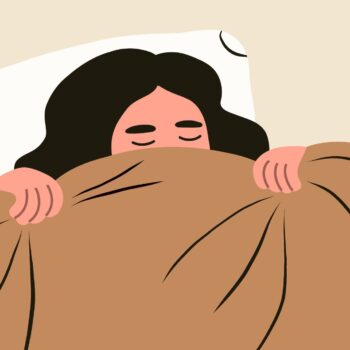
Early grief can feel like a cocoon, insulating you from the passage of time. But when you glance out the window, it's impossible to ignore that the world keeps turning. Everyone else is worrying about mundane things—the laundry, the next raise, economic trends, fashion. Meanwhile, you're sitting there feeling as if none of those things matter. You just want to bury your head in the sand, resisting the reality that time keeps passing.
Yet, even in this resistance, you are rebuilding yourself. For better or worse, every moment shapes who you are becoming. We often assume that doing nothing means nothing changes. But no movement is its own kind of movement. Inaction is still action. Not choosing is still a choice. As time moves forward, we are continuously becoming someone new—even if we have no idea who that person is yet.
Life as a Series of Small Choices
This post isn’t here to push you out of your grief cocoon. It’s not a critique of inaction or indecision. It’s simply a reminder that you have choices—every day. You’re already making decisions, and with a bit of mindful awareness, those small moments can become a helpful and gentle starting point in navigating life after loss and discovering who you’re becoming.
Life is composed of countless small choice points—not just big decisions or paths diverging in the woods, but tiny, everyday moments of choice. Choices that are happening even when we feel frozen in time. That's a truth that oscillates between bringing me feelings of empowered resilience and existential nausea.
- Do I get out of bed?
- Do I step outside to sit in the sun with my coffee, or stay on the sofa?
- Do I smile at the cashier, or mirror their stone-faced expression?
- Do I keep ruminating and obsessing or do I learn to stop?
- Do I tell myself I'll survive the day?
- Do I cancel my plans with a friend after work, or send a text saying, "I don't have much energy, but I'll do my best. See you soon."
- Do I quit my job and join a commune?
ACT Therapists Ann Bailey, Joseph Ciarroch, and Russ Harris describe these moments as "choice points," where each decision we make, small or large, moves us either toward or away from our values. That's a big deal, even in small moments.
Values: Caring By Choice.
To understand choice points, first you have to understand values.
The co-founder of Acceptance and Commitment Therapy, Steven Hayes, says values are caring by choice. This might not seem an obvious definition, but it is a helpful one. He reminds us that human beings long to freely pick and pursue our life direction - to decide what is important to us, what we stand for, and why we bother to put in the hard work of living.
And yet, life can quickly pull us away from our values. We get swayed by the values of others, by wanting to conform, by hoping to avoid pain and suffering, or to seek superficial gratification.
In grief, our values persist, though it may feel like loss has wiped them away. Often our motivation and energy has been depleted. Grief clarifies that some things we thought we valued were really values of others, or surface-level validation or avoidance. But when we begin to look more closely, we find that below the rubble of our loss, there is still a foundation of values we can prop ourselves up and build on.
Often we still value friendship, even though socializing feels depleting. We still value creativity, even if picking up a pen or paintbrush seems impossible. We still feel drawn to service and generosity, despite self-focus and fatigue. Often our values remain—even when hidden because our emotions and energy pull us in another direction.
Understanding The Choice Point Tool
Acceptance and Commitment Therapy is an approach that has always encouraged people to take committed actions in the direction of their values. In 2013, three ACT therapists - Baily, Cirroch, and Harris - introduced a "Choice Point Tool" to simplify this idea. They wanted to help us notice exactly when and how we can move towards our values by reconizing that even single, small choice point makes a difference.

In the Choice Point framework, the phrase "away moves" refers to actions that take us further from the person we want to be or the life we hope to build. These moves are behaviors that don't align with our core values—those deeply held beliefs about what matters most to us in life. When we choose "away moves," we're stepping back from authenticity or meaning, often without even realizing it.
Why would we move away from what we value?
Typically, we make these moves to avoid fear, discomfort, or pain. This is called experiential avoidance and we talk about it a lot around here. For example, we might isolate ourselves because social interactions feel exhausting, or we might numb out with distractions because facing grief feels overwhelming.
Experiential avoidance isn't the only reason for away moves. Sometimes we get caught up in needing to be right, looking good in front of others, or chasing short-term pleasure. We might cling to certain rules, justifications, or beliefs about how life should make sense. All of these can pull us away from the values that ultimately guide us toward meaningful living.
It’s important to remember that these “away moves” aren’t signs of weakness or failure. If self-compassion is somewhere on your list of values, let this be a reminder: when you catch yourself beating yourself up for those “away moves,” you can instead take a small step "toward" by acknowledging that these are very human responses to the pain of grief. Of course sometimes we just want to hide, forget about our values, and avoid the pain! We don't need to beat ourselves up for that.

But with awareness, we can gently begin to change our relationship with these away moves. We can make efforts to unhook from the avoidance that is pulling us away. We can simultaneously move—slowly, imperfectly, patiently—toward the choices that reflect our values and who we want to be, even when it’s hard.
Motivation vs. Meaning
Each small choice we face gives us an opportunity to ask ourselves: toward or away?
It asks, can I choose a direction because it means something—even if I am sad, depleted, and discouraged? Can I unhook from what pulls me away and "move towards" something else?
This idea is hugely counterintuitive. We often believe we must have motivation, energy, or happiness to do things and that despair will always prevent us from doing what matters. In reality, you've probably acted in service of values, despite despair and lack of energy, countless times without consciously noting it. Steven Hayes, the founder of ACT, describes this saying:
Nobody needs to be taught that life is hard—we quickly learn that ourselves. But what many people have been taught—sometimes subtly, sometimes explicitly—is that life only starts after the hard parts go away. That if you’re feeling anxious, you need to fix it before you can speak up. That if you’re grieving, you have to wait until the sadness is gone before you can begin again. The implicit mental rule is this: you have to avoid feeling bad to feel good, and you need to feel good before you can do good.
Steven Hayes, PhD
But it’s a trap.
What's the trap?
By believing we have to wait for pain to disappear to rebuild and do things that matter, we don't learn how to live well even when we don’t “feel good”.
ACT’s primary goal is to help us escape this trap. It aims to increase psychological flexibility—the capacity to be present with our deepest pain and suffering, while continuing to live well by committing to actions consistent with our core values.
Moving Toward Your Values
On the surface, we often think we need a clear vision of the future to make value-directed choices. That's scary when grief has a way of fogging up the future and making everything feel uncertain. The Choice Point model says it ok if you don’t have any goals right now, in this new world of life after loss. It’s ok if you have no idea who exactly you want to be or what comes next. You don't need a grand vision or a goal - you just need to be present with each choice point, learning to 'move toward' when we can.
Unlike goals, which live in the future and are quickly in the rearview once achieved, values are always here in the present. That’s what makes them powerful. When we focus on values, we’re not just chasing outcomes—we’re shaping how we show up in the world, one moment at a time.
The moment you name a value, you’re already beginning to live it. You don’t need a five-year plan or a burst of motivation. You just need a small moment of intention and the willingness to try. Not perfectly, not all the time. That’s not realistic—because we’re imperfect humans, grieving, doing the best we can.
The key is just to notice the choice points and choose with care. As Steven Hayes says, "Life asks for your participation, not your perfection. And your values—the things you truly care about—don’t demand that you wait until you feel ready. They just ask that you begin and show up".
You Are Becoming
Even when we'd prefer to freeze time or escape the uncertainty of our shaken identity, there’s something comforting in recognizing these small, everyday choices are an act of creation. When it feels like every ounce of agency has been ripped away from us, there is something freeing in asking, "with all this grief and pain just as it is, who will I be today?"
Our values serve as a compass, guiding us through these choice points, offering a direction even when we're not sure where we're going. They are simple acts of intention, slowly turning us into the person we're becoming.
That's not just something. It's everything.
We wrote a book!
After writing online articles for What’s Your Grief
for over a decade, we finally wrote a tangible,
real-life book!
What’s Your Grief? Lists to Help you Through Any Loss is for people experiencing any type of loss. This book discusses some of the most common grief experiences and breaks down psychological concepts to help you understand your thoughts and emotions. It also shares useful coping tools, and helps the reader reflect on their unique relationship with grief and loss.
You can find What’s Your Grief? Lists to Help you Through Any Loss wherever you buy books:




Abraham June 3, 2025 at 1:21 pm
Thank you for this. I found that I was already doing much of this without even noticing!
I will bookmark this article as I found it very inspiring and clear. And yeah, during my grief, I’ve been finding so much solace and comfort through values and big and small choices in the shape of “what would mom do?”.
Jody Tay May 30, 2025 at 6:00 pm
Dear What’s Your Grief,
I love ❤️ this. Thank you so much for clarifying the decision process. It’s been almost 3 years since my life partner, best friend, and husband ( rolled into one) died. Decisions are still so difficult for me on my own without him; but this will help so much. Your mission is so important and appreciated—to educate and heal the grieving. I’m coming out of the “devastated” phase and building a new life & identity. Shopping ( or addiction to dopamine) is a healing balm; concerned it is an avoidance technique. Decisions whether or not to even purchase something, invest in a project, etc, will be easier now, I hope; I’m going to try, for sure.
Blessings, love and hugs,
Jody Tay
Jody Tay May 30, 2025 at 5:56 pm
Dear What’s Your Grief,
I love ❤️ this. Thank you so much for clarifying the decision process. It’s been almost 3 years since my life partner, best friend, and husband ( rolled into one) died. Decisions are still so difficult for me on my own without him; but this will help so much. Your mission is so important and appreciated—to educate and heal the grieving. I’m coming out of the “devastated” phase and building a new identity. Shopping ( or addiction to dopamine) is a healing balm; concerned it is an avoidance technique. Decisions whether or not to even purchase something, invest in a project, etc, will be easier now, I hope; I’m going to try, for sure.
Blessings, love and hugs,
Jody Tay
Donald Leedy May 30, 2025 at 3:32 pm
I’ll have to say this article is right on and it puts in words what I can’t do personally. I used to pride myself with all of the interests that I have. But none of them seem to matter when I don’t have my sweet, sweet Joan to share them with. I like your concept “ACT.” Because I DO make a choice when I think of each interest “to do or not to do.” Much of the time it is “not to do.” Especially as it comes with being with friends, because as you point out, they don’t understand.
Thanks for this article……….DSon
Rachel Susan Dohme May 30, 2025 at 2:53 pm
Thank you for this column today. It’s been a year 18 months now after 48 years. They say the second year is harder, as the numbness wears off. For me, this is true.
Thank you for helping make choices, like opening up this email.